The threat starts with what is exposed
“Anything vulnerable right now will be hit quickly,” Spyros Papageorgiou warned, speaking to ERTnews about cyberattacks. As he explained, artificial intelligence enables attackers to identify weaknesses more easily and automate parts of the process. This does not mean that every vulnerable system has already been breached; it does, however, show why the time between identifying a vulnerability and attempting to exploit it can be critical.
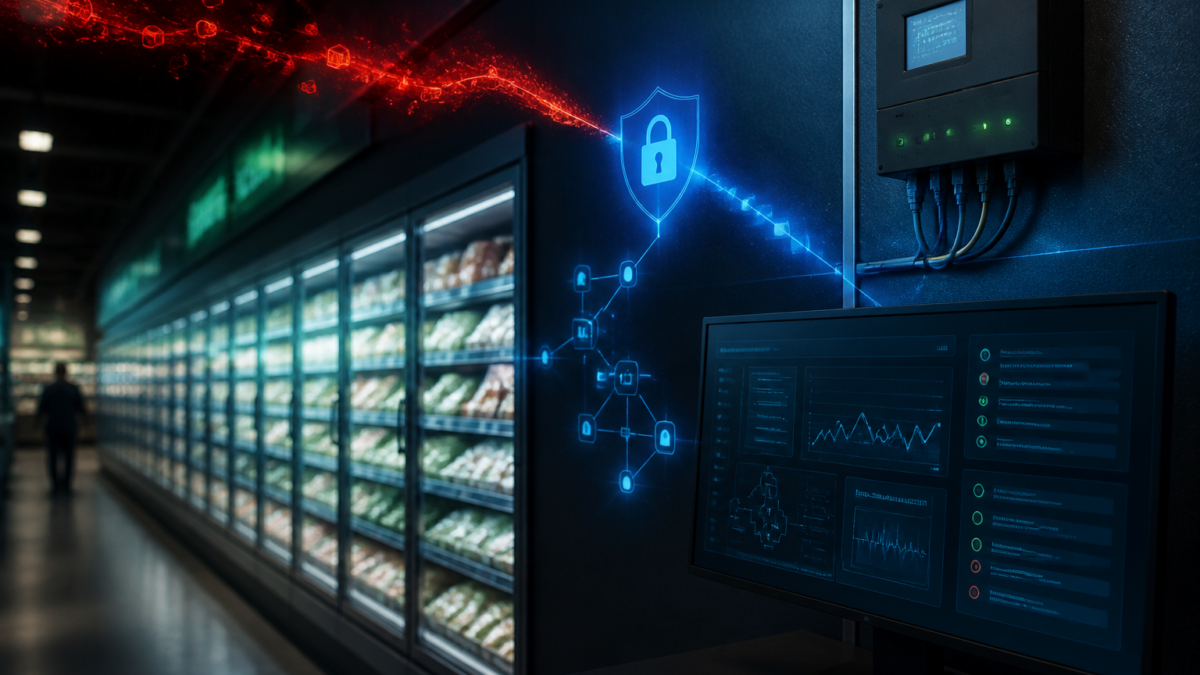
Asked about refrigeration systems in supermarkets, the secretary general said there was concern that they could be targeted. The sources do not document a specific cyberattack on Greek supermarkets: the reference concerns the risk and how to protect against it. Papageorgiou noted that, in one example, remote access could provide an entry point if it allows the system to be operated.
Why state actors are the greatest concern
Papageorgiou distinguished cybercriminals, who seek financial gain, from state actors. He said the latter pose the most dangerous threat, as they may seek access to and control over systems, collect information, or gain the ability to disrupt the operation of critical infrastructure during a crisis or war. According to him, such intrusions are difficult to detect in time.
The significance is not limited to military networks. When services and infrastructure depend on digital systems, a breach can affect their operation, not just information security. The secretary general said cyberattacks often precede military operations because attackers seek to target services that support the war effort. This is an assessment he made, not a prediction of a specific incident.
“If we want to address it, we have to think like the attackers.”
Spyros Papageorgiou, Secretary General for the Protection of Critical Entities
Defense requires threat hunting and restricting access
According to Papageorgiou, attacks are usually prepared in advance: attackers map out which systems are accessible, examine their software, and look for weaknesses before attempting to gain deeper access. That is why he described “threat hunting”—the active search for intruders who may already be inside a network without having been detected—as necessary.
For defense, he emphasized reducing exposed points, upgrading or replacing vulnerable systems, and continuous monitoring. In the case of remote refrigerator management, he said it is necessary to check whether the application is exposed and how it operates. This has practical significance for businesses that manage equipment remotely: ease of maintenance needs to be combined with restricted access and oversight.
Prevention comes before a crisis
The secretary general’s message is to identify weaknesses before someone else exploits them. In practice, this means taking stock of systems that are connected or remotely accessible, reviewing user permissions, and monitoring for unusual activity. The principle of “least privilege,” which Papageorgiou mentioned, means that each user or application should have only the access needed to do its job.
The sources do not mention a specific timeline or new measures set to be implemented in Greece. The next practical step for organizations, based on the recommendations described, is to first check which systems are exposed and who can operate them. Early prevention does not guarantee absolute security—as Papageorgiou noted, none exists—but it limits opportunities for intrusion.
The Greek dimension
The potential targeting of refrigeration systems in supermarkets was mentioned as a concern; the sources do not confirm an attack on Greek facilities.