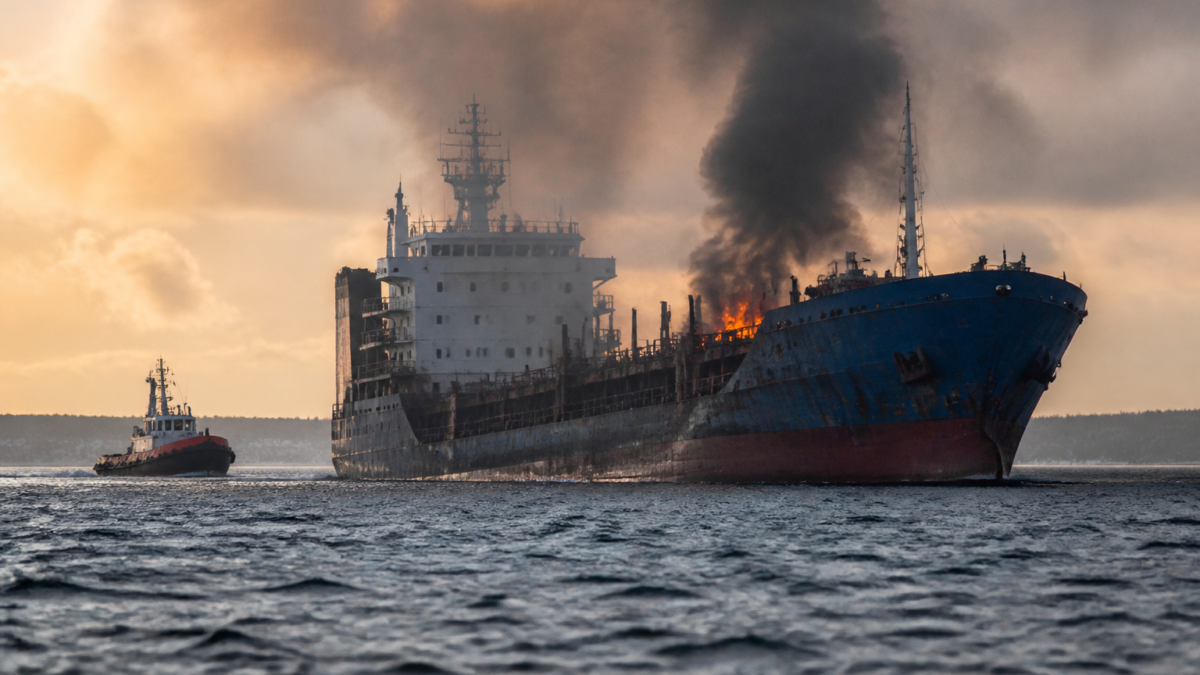
Two drones, one ship and a route to Kaliningrad
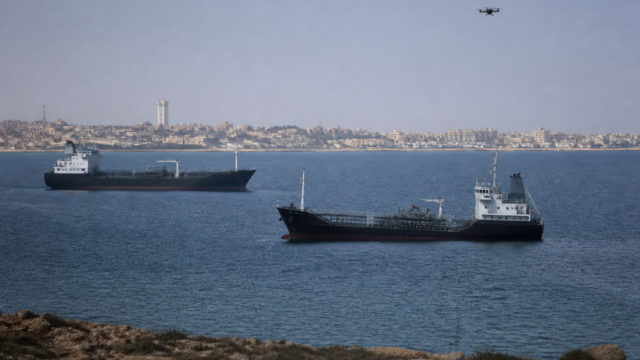
On Saturday, 21/11, the cargo ship Sparta II was heading for the Russian exclave of Kaliningrad after departing from St Petersburg, according to the information available. Aleksandr Drozdenko, governor of the Leningrad region, said that two drones had hit the ship. According to his account, the incident took place in international waters, about three nautical miles from the Russian border.
Finland confirmed that it had detected a drone attack on a Russian cargo ship, without specifying where the aircraft had come from. Finland’s Ministry of Defence said the ship had been damaged. This confirmation concerns the incident, not the identity of those who carried it out—a distinction that remains essential in the absence of independent evidence about the drones’ origin.
Initial reports from Estonia gave different reference points for the ship’s location: about 11 nautical miles north of Vaindloo Island, while the Russian statement measured the distance from Russia’s border. The two descriptions indicate the location from different geographical reference points. The incident took place on an international sea route, within the area of responsibility of the St Petersburg Maritime Rescue Coordination Centre.
The fire and the drift into Finnish waters
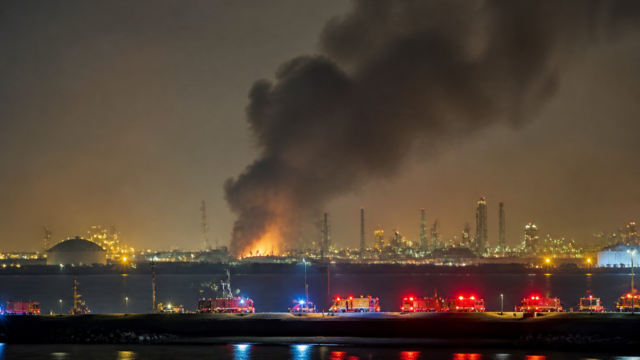
A fire broke out on the ship after the attack. The Finnish Border Guard sent personnel to the scene and said the ship had drifted into Finnish territorial waters. Estonian authorities were notified at 09:35 of a fire on the Sparta II, while initial reports also mentioned explosions. These reports describe how the situation unfolded as agencies from more than one country monitored it in parallel.
Drozdenko said that the evacuation of the crew was under way and that the relevant services were assessing the damage. The Finnish statement, by contrast, gave no information about the crew. No injuries or deaths have been reported, while both the type of cargo and the full extent of the damage remain unknown. The difference between the updates does not alter the central fact: the operation involved a damaged ship that was moving and no longer proceeding as originally intended.
The Finnish Border Guard said that, at the time, the situation did not pose a danger to other ships. No reports of marine pollution had been recorded either. These are important details about the immediate situation at sea, but they are not a definitive assessment: the authorities were still monitoring the ship and evaluating the consequences.
“At this time, the situation poses no danger to other ships.”
Finnish Border Guard
Traffic restrictions and coordination between authorities
Temporary restrictions on air and maritime traffic were imposed in the eastern part of the Gulf of Finland. The first restrictions took effect at 04:15 for flights and at 04:20 for shipping, and were lifted at 07:43. At around 09:33, an airspace restriction was reinstated. Finland’s General Staff said the measure was not reinstated because of any specific, immediate danger. It was a precautionary move prompted by drone activity in the wider area.
Finland informed NATO about the incident. Estonia monitored developments in cooperation with Finnish agencies and said it was ready to assist if Russia requested international help. The involvement of multiple authorities is also linked to the ship’s location: the incident took place in international waters, near the maritime areas of responsibility of neighbouring states, while the ship drifted into Finnish territorial waters.
The restrictions do not in themselves prove that there was a wider or immediate threat to the area. They do, however, show that the authorities treated the presence of drones as grounds for precautionary traffic management. In a sea corridor where commercial shipping and heightened military surveillance coexist, maintaining a clear picture of ships, aircraft and potential risks becomes part of the operation itself.
The incident amid a period of increased drone activity
At the time of the attack, the Sparta II was in the Leningrad region, which had been placed on alert because of a drone threat. Russian authorities said that air defences had shot down 80 drones in the region and that the air alert ended at 13:17. This figure comes from a statement by the Russian authorities and has not been independently confirmed in the sources.
The same region includes the wider St Petersburg area and has strategically important ports and energy facilities. On 11 November, a fire was reported at the port of Ust-Luga following a drone attack, while a separate strike on a Russian warship in the Gulf of Finland had been recorded a few days before the incident involving the Sparta II. The latter should not be confused with the attack on the cargo ship.
Russian media attributed the attack on the Sparta II to Ukrainian drones, but this account has not been independently confirmed. Finland did not specify where the drone had come from. For now, therefore, what is substantiated is the attack detected by Finnish forces and Russia’s allegation that two drones were involved—not who operated them.
The unanswered questions about shipping
The picture of the incident remains incomplete on several critical points. The ship’s cargo has not been identified, and no full assessment of the damage has been made public. The statements describe the evacuation of the crew but provide no detailed information about their condition. Above all, the origin of the drones has not been established, a fact that would be necessary to attribute responsibility with certainty.
For shipping safety, the immediate conclusion is limited but clear: a commercial ship was damaged and caught fire in international waters, drifted into Finnish territorial waters, and neighbouring authorities were mobilised. The Finnish Border Guard detected no danger to other ships at the time, and there were no reports of pollution. These facts describe the situation at that moment, not a definitive assessment of what may follow.
Further clarification from the relevant authorities will determine what happened to the ship, the extent of the material damage and whether evidence about the attack emerges. Until then, the case combines confirmed facts with significant gaps: the attack and the fire were recorded, but the origin of the drones and the full operational context remain unclear.