Six Saturdays of protests, with a marked drop in turnout figures
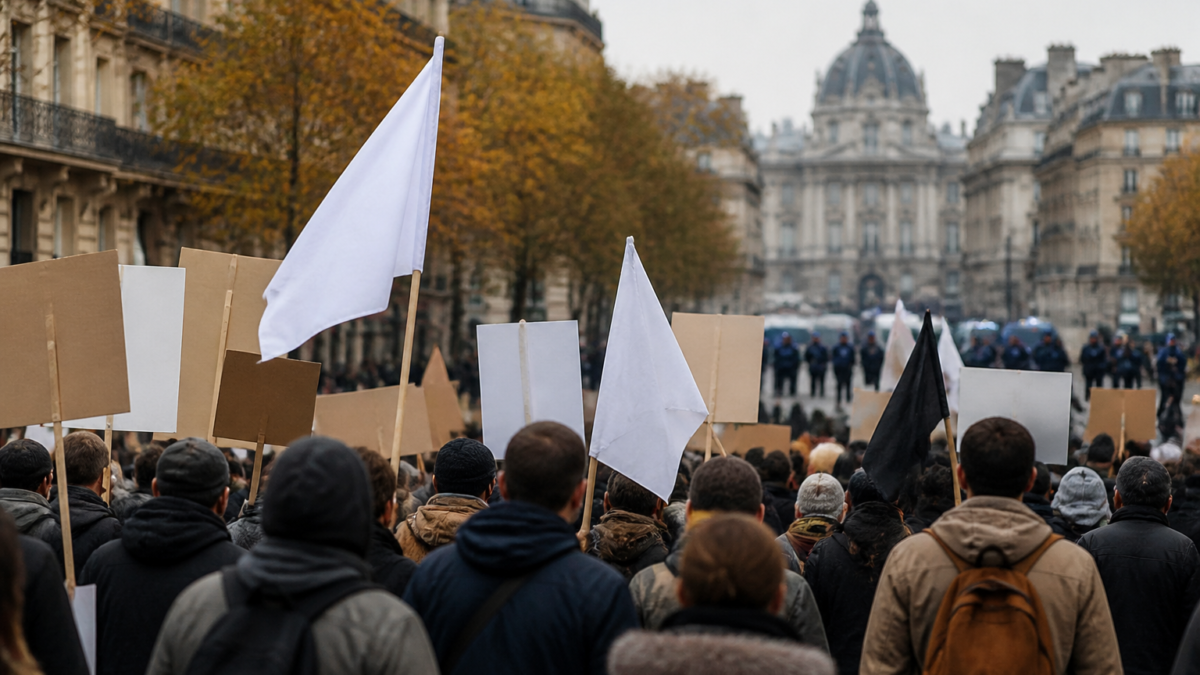
Protesters in France focused on pay, public services, study conditions and access to decent housing. In Paris, police estimated that 21,500 people took part, compared with 24,000 the previous Saturday. The inter-union youth alliance gave a much higher estimate: 45,000, down from 100,000 the previous week.
Nationwide, organisers reported 150,000 protesters, compared with 200,000 the previous week. The Interior Ministry recorded 82,500, after announcing 106,000 the previous week. The two sides therefore agree on the direction of the change—lower turnout—but not on its scale. These are separate estimates and should not be confused.
Cost of living brings together different social demands
Students and school pupils took part in the Paris march, alongside trade unions, left-wing parties and supporters of the “Yellow Vests”, the protest movement that emerged in 2018. Their presence linked issues that are often discussed separately: work, studies, housing and access to essential services.
Manon Moret, general secretary of the French student union UNEF, described the pressure on young people as a shared European problem: “They have to choose between housing, healthcare and enough food.” Her remarks show why the protests were not limited to a single demand: demonstrators linked the rising cost of living to whether they can meet their basic needs.
“They have to choose between housing, healthcare and enough food.”
Manon Moret, general secretary of UNEF
New police law and protests across Europe
In Paris, placards protested against a law adopted on Friday concerning the presumption that law enforcement officers use their weapons lawfully. The protesters’ message was critical of the measure. Reports have also referred to serious injuries among protesters during the movement, while independent observers and human rights organisations have described the crackdown as disproportionate. These are allegations attributed to the groups that made them.
In Lyon, where demonstrations had been banned across a large area, unauthorised marches attempted to head towards the city centre. According to an Agence France-Presse journalist, security forces used tear gas and the marches were dispersed. Around 70,000 police officers and gendarmes had been deployed across the country.
The French marches were part of a European call by trade unions and housing organisations, with events taking place from Friday to Sunday. On Friday, protests were reported in Milan, London, Amsterdam and Lausanne, among other cities. Available information indicates that turnout in France is declining, while the issues fuelling the protests remain shared with those raised in other European cities.