The operation in Guasave and the eight arrests
On November 20, special forces from the Mexican Army and National Guard carried out an operation in the Guasave area of Sinaloa state. Their target was Fausto Isidro Meza Flores, known as “El Chapo Isidro,” whom authorities describe as the head of a criminal organization. His arrest was announced the following day by Mexico’s Ministry of National Defense, which said that special forces working with the state’s security authorities had also taken part in the operation.
According to the ministry’s account, military forces approached the area along different land routes and used technological resources to locate the target. They then established a security perimeter to make it harder both for him to escape and for reinforcements to arrive. The ministry said the forces came under fire and were attacked with explosives before entering the compound and making the arrests.
The toll later announced was eight people arrested in total: Meza Flores and seven others whom authorities link to the organization. They include Germán, nicknamed “Serafín,” whom the ministry describes as second-in-command, and José, who reportedly had a financial role. The three were flown to Mexico City and handed over to the relevant federal authorities. The other five were placed at the disposal of prosecutors in Sinaloa.
Eleven dead and a city in turmoil
The operation came at a heavy cost: according to the Ministry of Defense, four military personnel and seven people described by authorities as alleged members of the criminal organization were killed. The ministry attributed the military deaths to the resistance encountered during the attempt to make the arrest. It also offered condolences to their families and announced that support would be provided. The available information contains no confirmation of civilian casualties; the ministry said no civilian injuries were reported.
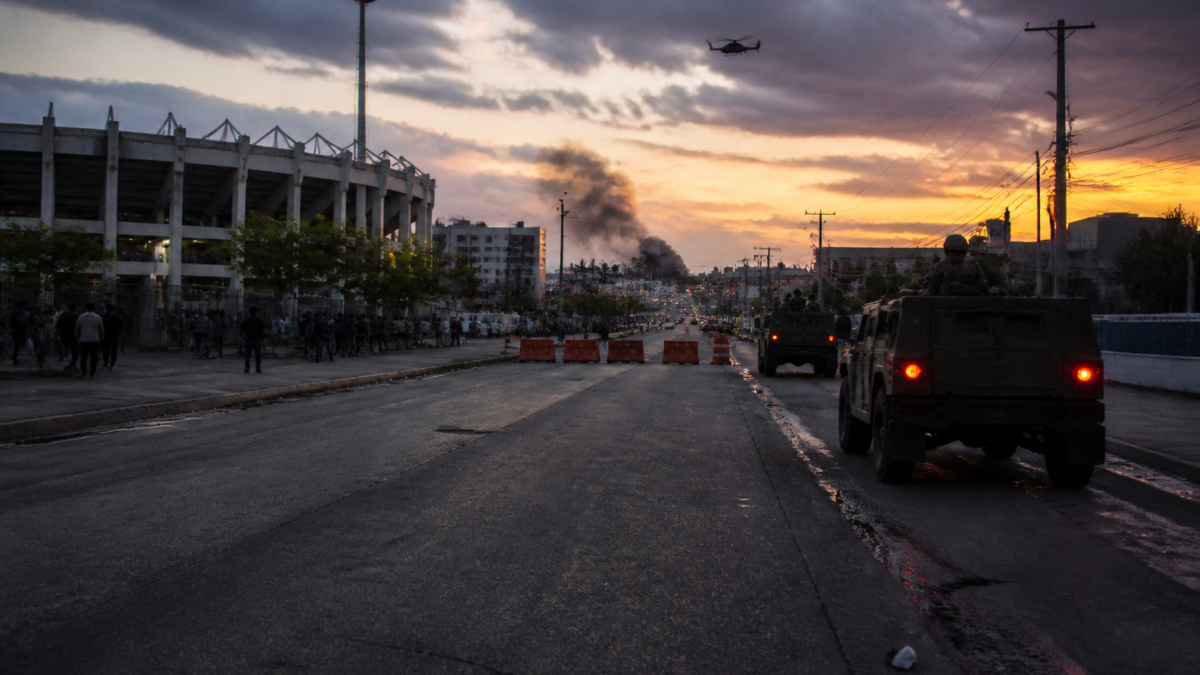
After the arrest, roadblocks were reported in the municipalities of Ahome, Guamúchil, Guasave and Navolato. The ministry said a plan was activated to clear the blockades and restore traffic, with security forces deployed. Reports from the area describe vehicles and businesses being set on fire, as well as drivers who were trapped or forced to change course because of the closed roads.
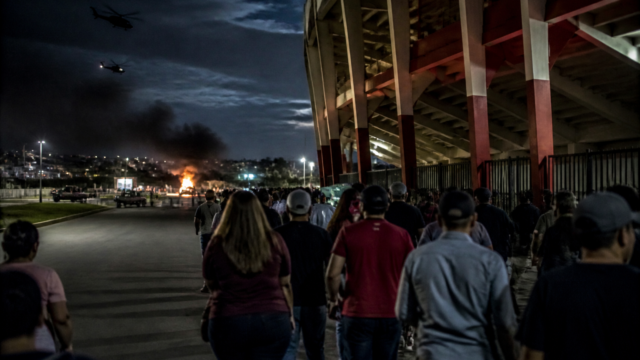
Tensions were also felt at a sporting event. At Kuroda Park, spectators rushed to leave the stands when gunshots were heard, and the game was halted. It was not clear whether the shots came from the stadium or a nearby location. Videos circulating online appear to show people seeking cover. Other images reportedly show helicopters over the area, though the official account of the operation focuses on the approach and perimeter established by ground forces.
“They came under fire and were attacked with explosives.”
Mexico’s Ministry of National Defense
From the Beltrán Leyva cartel to his own organization
Meza Flores’s profile is tied to the long history of drug-trafficking organizations in northern Mexico. Available information describes him as a former senior member of the Beltrán Leyva organization before he took a leadership role in his own network, referred to as the Meza Flores Organization or the Guasave Cartel. The split between rival factions of Beltrán Leyva is linked to the escalation of violence and the emergence of his own organization, which reportedly had taken shape by 2013.
Since February 2025, U.S. authorities had included him on the FBI’s Ten Most Wanted Fugitives list. A reward of up to $5 million had been announced for information leading to his location and arrest. In Mexico, he was subject to an arrest warrant for participation in organized crime and drug-related offenses, while the United States sought his extradition on charges linked to drug trafficking.
The charges do not in themselves constitute a judicial finding. The U.S. prosecutions cited in the sources relate to an alleged conspiracy to produce and traffic large quantities of cocaine, heroin, methamphetamine and marijuana from 2005 to 2019. In addition, the FBI accuses him of crimes including kidnapping, extortion and torture, while U.S. authorities have linked his organization to drug trafficking into the United States. These allegations are attributed to the relevant authorities and will be decided through the appropriate proceedings.
Cooperation with the United States and the next legal step
Mexico’s Ministry of Defense described the operation as the result of cooperation between the intelligence services of Mexico and the United States. According to the announcement, U.S. assistance involved providing information to locate the target, while Mexican forces carried out the arrest. The operation is part of a broader effort by Mexican authorities to tackle criminal networks involved in drug trafficking.
The transfer of the three main suspects to Mexico City marks the start, not the completion, of their legal proceedings. The charges against them will have to be examined and the relevant authorities will have to decide on the next steps, including the U.S. request for Meza Flores’s extradition. The sources say the other five people arrested were handed over to prosecutors in Sinaloa.
The arrest of a leading figure can deal a blow to a network, but it does not guarantee that the violence will stop. Experts warn that removing senior figures from criminal organizations can spark competition for control of their activities. In this case, the immediate response—roadblocks, arson and armed clashes—shows how quickly an operation targeting a wanted fugitive can turn into a crisis for residents. Whether the arrest will significantly weaken the organization or usher in a new cycle of conflict remains to be seen.