Beyond calories: a broader warning signal
Discussion of ultra-processed foods often revolves around weight. Theodora Psaltopoulou, an internist and Professor of Epidemiology and Preventive Medicine at the School of Medicine of the National and Kapodistrian University of Athens, highlights other dimensions of the issue: higher consumption of these products has been linked to heart and metabolic diseases, gastrointestinal problems, anxiety, depression, cancer and death from any cause. These are associations reported in large meta-analyses, not proof that a specific food on its own causes a disease.
This distinction matters. The picture described concerns an overall dietary pattern and the increased presence of certain products in everyday life, not a single choice or meal. The professor also notes that factors such as less physical activity, disrupted sleep and greater stress may coexist. The available information does not isolate a single cause for every health problem; it does, however, document a series of associations that make overall diet an important area of concern.
What falls into the category and why frequency matters
Examples cited include packaged croissants, cakes and biscuits, savoury snacks such as cheese puffs and potato chips, as well as soft drinks. The description refers to industrially manufactured products that undergo extensive processing and contain various additives. This does not mean, however, that every product in this category has the same composition or should be treated as equally harmful.
A key part of the assessment is the space these products occupy in the daily diet: how often they are consumed and in what quantities, compared with less processed options. Their composition and processing can affect calorie intake, while many of the products described are low in fibre. This matters because fibre contributes to a feeling of fullness. According to the professor, some formulations may encourage greater consumption without a corresponding sense of satiety. Soft drinks, therefore, also need to be factored into daily choices.
“What matters, too, is the place they occupy in the daily diet.”
Theodora Psaltopoulou, internist and Professor of Epidemiology and Preventive Medicine at the National and Kapodistrian University of Athens
The finding involving 300,000 Europeans and the importance of a small change
Amid the concerns, one finding points towards a practical approach. Psaltopoulou says that a study followed more than 300,000 Europeans for several years. In that study, replacing a portion equivalent to 10% of daily consumption of processed and ultra-processed foods with minimally processed foods was associated with lower mortality.
This finding does not amount to a promise that a specific change will have the same effect for everyone. It is presented as an association in a large group and underlines that the goal need not be to overhaul one’s entire diet overnight. The professor’s message is that even a limited shift in everyday choices can matter. The emphasis is on gradually reducing the share of ultra-processed products, not on seeking an absolute or instant solution.
Children, appetite and the role of fibre
There is concern about the consumption of such products from an early age, as well as childhood obesity. Psaltopoulou notes that this is a significant issue in Greece, too. The sources do not provide specific percentages or figures on the scale of the problem, but they stress the need for dietary guidance to address children and adolescents as well as adults.
The focus is also on how the composition of certain products relates to appetite. When a food is low in fibre and does not contribute as much to satiety, it may be harder to limit the amount consumed. Possible mechanisms related to insulin function are also cited, along with an increased likelihood of diabetes, dyslipidaemia, hypertension and fatty liver disease. These conditions are associated with adverse health effects and cardiovascular disease, though this does not mean the impact is the same for everyone.
The packaging makes promises; the ingredients list reveals more
The claim “0% fat” or a reference to added protein, vitamins or no added sugar may catch the eye. It is not enough, however, to describe a product’s overall nutritional value. Adding one ingredient or removing another does not, in itself, guarantee that the final choice is better. The product’s composition needs to be assessed as a whole, rather than judged only by the message displayed on the front of the packaging.
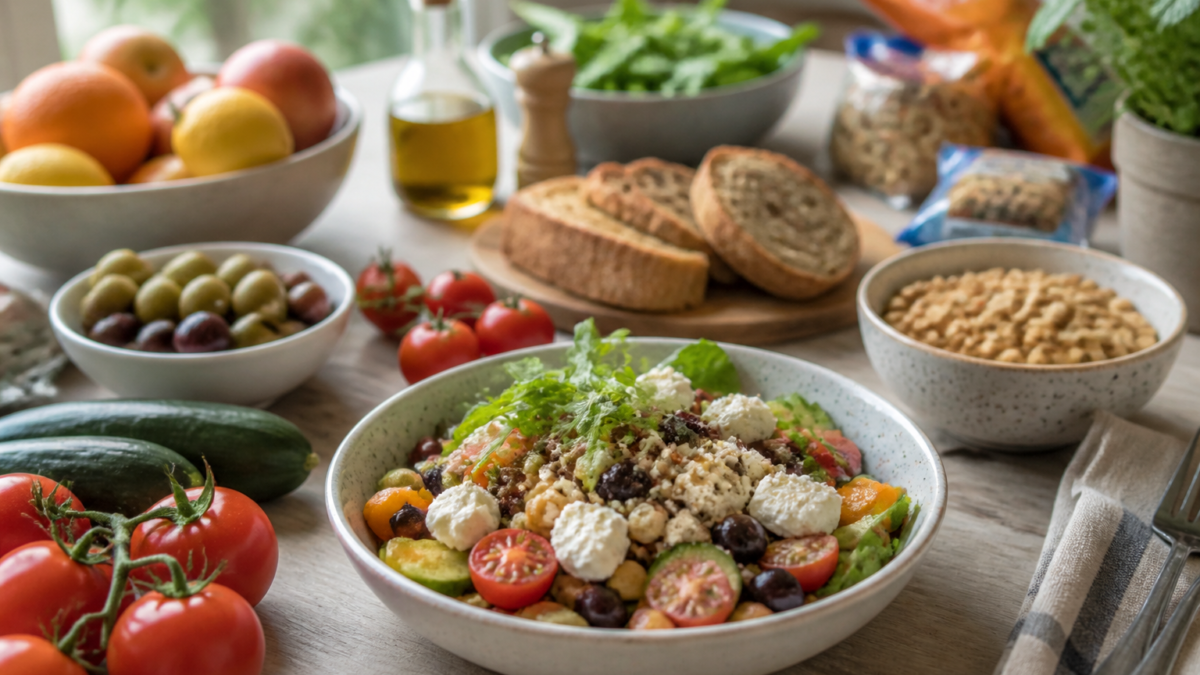
The professor recommends checking the sugars, fats and ingredients listed on the label. This offers a more complete picture than choosing a product on the basis of a single marketing claim. At the same time, the approach described does not call for excluding every processed food or imposing absolute bans. The aim is to reduce the share of ultra-processed options and strengthen the Mediterranean diet, with fruit, vegetables and legumes playing a central role. The practical challenge, as these observations suggest, is to achieve balance across the diet as a whole.
The Greek dimension
The professor notes that childhood obesity is a significant issue in Greece, too.