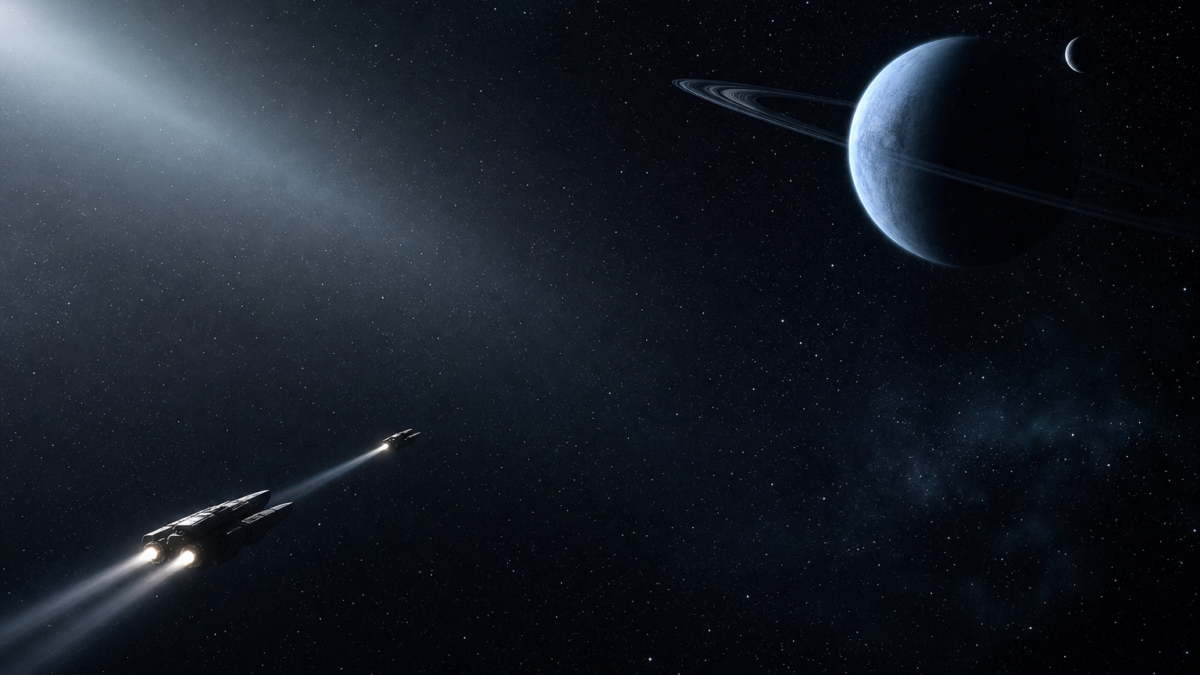
Voyager 1 is about 26 billion kilometers from Earth, in interstellar space. The one-light-day milestone was confirmed on November 18, at 10:16:07 UTC. This means that a signal traveling at the speed of light takes about one day to cover the distance to the spacecraft. It was launched in 1977.
Voyager 2 flew past Neptune on August 25, 1989, and remains the only spacecraft to have visited the planet. A composite image based on observations during the flyby and in the following days shows Neptune, Triton and parts of its faint ring system. Voyager 2 is also in interstellar space in 2026.
Why it matters
Voyager 1’s milestone shows just how far the spacecraft has traveled: it is now so distant that signals take one day to cross the distance at the speed of light. Voyager 2’s observations remain the basis for images from the only close flyby of Neptune by a spacecraft.
Background
On November 17, space exploration enthusiasts sent a Morse code message into the night sky using a flashlight. The signal, captured in a long-exposure photograph by the Emirates Astronomical Observatory, reads V-G-R and is Voyager 1’s call sign. At a rate of one light-day of distance every 50 years, the estimate given is that the spacecraft will take about 18,250 years to reach a distance of one light-year, or 365 light-days.