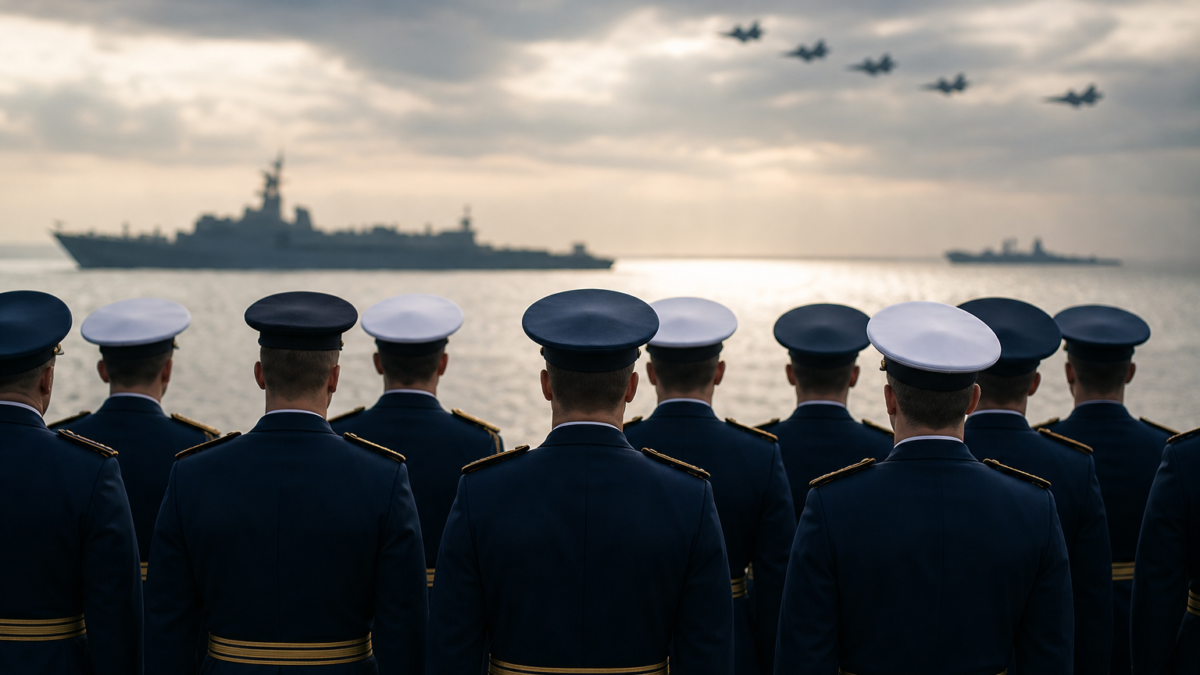
An anniversary focused on those who serve
In his post for Armed Forces Day, the prime minister gave the anniversary a dual purpose: honouring the memory of those who lost their lives and recognising the service personnel who remain on duty. His remarks were not limited to a greeting for the day. He placed the people serving in the Armed Forces, and the relationship between operational readiness and the State’s responsibility towards them, at the centre of public debate.
The message links the military’s mission to protecting the country and fostering a sense of security in society. Mitsotakis described service personnel as people who remain on alert and attributed their contribution to responsibility, professionalism and high morale. At the same time, he stressed that the State must support them through concrete action. This statement serves as a bridge to the two main strands of the post: the capabilities of the Armed Forces and the living conditions of their personnel.
The anniversary is therefore presented not only as a ceremonial moment of remembrance, but also as an opportunity to outline the direction of government policy. However, it is not accompanied by a detailed account or figures on personnel and the measures mentioned. The emphasis is on the overall picture: stronger defence capabilities, alongside a promise to support those who serve.
From frigates to drones: the equipment picture
To substantiate his reference to strengthening defence capabilities, the prime minister listed a range of assets and programmes. These include Belharra frigates, Rafale and F-16 Viper fighter jets, and Romeo helicopters. He also included the “Achilles’ Shield” and Greek drones in the same presentation, and referred to F-35 aircraft expected at a later stage.
The list reflects the range of categories covered by the message: naval assets, aircraft, helicopters, and systems or technologies related to defence. The post, however, is not accompanied by technical specifications, costs, numbers of units or a detailed timeline. The F-35s are mentioned as a future addition, without a specific date being given. The picture is therefore political and concise, rather than a comprehensive presentation of the programmes.
The emphasis on these specific names also serves a communications purpose: it turns a general reference to modernisation into a clear list of assets. The prime minister presents them as examples of the effort to give the country stronger deterrence capabilities. This is the central claim of his statement, not an independent assessment of the operational impact of each system. The information available does not include expert opinion or an assessment of how these capabilities compare with specific threats.
“The State stands by them through actions, not words.”
Kyriakos Mitsotakis, prime minister
Deterrence as a response to an uncertain environment
The political argument running through the post is that strengthening the Armed Forces is linked to safeguarding sovereignty. Mitsotakis described the international situation as a period of major geopolitical shifts and new risks, arguing that peace cannot be taken for granted. In this context, he presents deterrence as a factor that, in his words, protects national sovereignty.
The post, however, does not name specific threats or analyse their origins. Nor does it present figures quantifying defence strength or measuring the effectiveness of deterrence. The message remains at the level of general strategic direction: in an environment described as fluid, the country must be strong and prepared. This distinction matters because political declarations describe objectives and priorities, but are not sufficient on their own to assess implementation or results.
The prime minister combined his reference to security with the image of Greece as a force for stability in the region. This connection gives defence policy a broader political dimension: it is presented not only as a matter of protecting borders, but also as an element of the country’s position in a turbulent region. No specific examples of actions or partnerships were provided, however, to explain this regional dimension in greater detail.
Salaries and housing: the other side of defence policy
Alongside equipment, the prime minister placed the improvement of military personnel’s pay and support for their housing in the same context. This reference acknowledges that the functioning of the Armed Forces concerns not only the assets at their disposal, but also personnel conditions. According to his statement, the State is seeking to provide support in more than one area.
No amounts, beneficiaries, criteria or specific measures concerning salaries and housing are mentioned, however. Nor is it specified when the measures will be implemented or how extensive they will be. The reference therefore functions as a political commitment and an indication of priorities, rather than a full briefing on the details of a programme. Assessing what is changing in service personnel’s daily lives would require specific information that is not included in the post.
Presenting equipment and support for personnel together broadens the message: strength is described not only in terms of platforms and systems, but also in terms of the organisation’s ability to support those who staff it. The post itself does not assess whether the measures are sufficient or what difficulties remain. It also does not include opposing views or criticism from experts and organisations. Consequently, the social-support aspect is presented through the government’s position, without an independent assessment of the results.
The “Agenda 2030” and the questions that remain open
Mitsotakis linked the direction of defence policy to the “Agenda 2030”, presenting it as part of a broader path for the country. In the same reference, he included goals such as confidence, growth and social progress. The post does not explain in detail how each defence procurement programme or support measure fits into this agenda. It does, however, provide a political framework in which defence, stability and the country’s overall course are presented as interconnected.
The next step in the discussion concerns the details not included in the message: timelines, costs, implementation targets and specific measures to support personnel. These are the elements that would allow public debate to move from general direction to an assessment of the policy. The post does not answer these questions, nor does it present an evaluation of procurement choices or their potential effects.
As an anniversary statement, the message combines a tribute, references to military assets and an assurance that supporting service personnel is a priority. Its central idea is clear: in an environment the government describes as uncertain, deterrence is considered necessary to protect the country. The scope and effectiveness of this policy, as well as the practical substance of the commitments to military personnel, remain to be judged in light of the specific decisions and information that follow.
The Greek dimension
The post concerns Greece’s defence policy, the Armed Forces and support for their personnel.